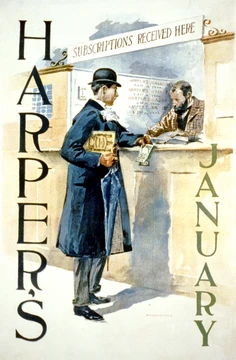
New Statesman
A British left-wing political and literary weekly since 1913.

via Wikipedia: New Statesman · see source
The New Statesman is a British political and cultural news magazine published in London. Founded on 12 April 1913 as a weekly review of politics and literature, it was initially connected with Sidney and Beatrice Webb and other leading members of the socialist Fabian Society, including George Bernard Shaw, a founding director. The magazine has been known for its left-leaning political stance and its influence on British intellectual and political life.
- born
- 12 April 1913
- field
- Political and cultural news magazine
- nationality
- British
- founders
- Sidney Webb, Beatrice Webb, George Bernard Shaw
- longest_serving_editor
- Kingsley Martin (1930–1960)
- current_editor
- Tom McTague (from 2025)
Verified Timeline
Lore & Background
The New Statesman was founded in 1913 by Sidney and Beatrice Webb with support from George Bernard Shaw and other Fabian Society members, after the Fabians' previous outlet, The New Age, moved away from their politics. The first editor was Clifford Sharp, who served until 1928, with J. C. Squire editing during Sharp's wartime duties in the First World War. In November 1914, the magazine published Shaw's anti-war supplement 'Common Sense About The War', which sold 75,000 copies and caused an international sensation. Sharp's later years were marked by chronic alcoholism, and deputy Charles Mostyn Lloyd effectively edited the paper until Kingsley Martin took over in 1930.
Reader's Guide
The New Statesman's significance lies in its long-standing role as a voice of the British left, shaping political and cultural discourse for over a century. Under Kingsley Martin's 30-year editorship, the magazine became strongly anti-fascist and pacifist, opposing British rearmament in the 1930s and later criticizing Soviet policy after the Hitler–Stalin pact. It welcomed Labour's 1945 election victory but took a critical line on foreign policy, and its articles helped found the Campaign for Nuclear Disarmament. The magazine has launched and nurtured major writers, including John Maynard Keynes, Virginia Woolf, Christopher Hitchens, and Paul Johnson. Its circulation peaked at 93,000 in the mid-1960s, declined, then grew again by the mid-2010s; in 2020 it had a certified average circulation of 36,591 and 27 million page views online. The magazine merged with The Nation and Athenaeum in 1931, becoming the New Statesman and Nation until 1964, and absorbed The Week-end Review in 1934, whose features survive as the Weekly Competition and 'This England'.
Did You Know?
- The magazine was jocularly referred to as 'The Staggers' – an example of Oxford '-er' undergraduate slang – and that nickname is now used as the title of its rolling politics blog.
- In November 1914, George Bernard Shaw's anti-war supplement 'Common Sense About The War' sold 75,000 copies by the end of the year and was reprinted by The New York Times.
- Graham Greene once won second prize in the magazine's Weekly Competition for a challenge to parody his own work.
- The magazine's circulation peaked at 93,000 in the mid-1960s, but by 2020 the certified average circulation was 36,591.
- In 1938, editor Kingsley Martin refused to publish George Orwell's dispatches from Barcelona because they criticised communists, writing that 'any hostile criticism of the present Russian regime is liable to be taken as propaganda against socialism.'
Fabian Origins and the Anti-War Voice
The New Statesman was born in April 1913 out of a specific political frustration. The Fabian Society, a socialist group that had previously backed the journal The New Age, found that publication drifting away from causes close to their hearts, including women's suffrage. Sidney and Beatrice Webb, along with George Bernard Shaw and other prominent Fabians, stepped in to create a new weekly review of politics and literature. Clifford Sharp took the helm as first editor, serving until 1928, while Desmond MacCarthy joined as literary editor and later brought Cyril Connolly onto the staff. The magazine's early impact was dramatic: just three months after the First World War began, Shaw contributed a lengthy anti-war supplement titled "Common Sense About The War," which savaged all belligerent nations but aimed its sharpest barbs at Britain. It sold a remarkable 75,000 copies by year's end and made an international splash, with The New York Times reprinting it as America debated entry into the conflict.
Kingsley Martin and the Politics of Principle
Kingsley Martin's three-decade editorship from 1930 to 1960 defined the magazine's political identity. In 1931, the New Statesman merged with the Liberal weekly The Nation and Athenaeum, taking on a new name it would keep until 1964. Under Martin, the paper shifted decisively leftward, embracing anti-fascism and pacifism while opposing British rearmament. His 1938 editorial after the Anschluss expressed a willingness to support even isolationist, anti-empire policies if they meant avoiding war. The magazine's coverage of the Soviet Union was equally contentious. Martin's sympathetic book on Stalin drew criticism from John Maynard Keynes, who called him "a little too full perhaps of good will," yet Martin still published the review. The paper defended Soviet collectivisation while acknowledging it had "proceeded far too quickly." Perhaps most infamously, Martin refused to print George Orwell's dispatches from Barcelona during the Spanish Civil War because they criticised communists for suppressing anarchists and the POUM, arguing that hostile criticism of the Russian regime would be mistaken for anti-socialist propaganda.
A Literary Incubator and Intellectual Home
Beyond its political reporting, the New Statesman has long served as a launchpad and gathering place for writers and thinkers of the highest order. Its contributor roster includes John Maynard Keynes, Bertrand Russell, Virginia Woolf, Christopher Hitchens, and Paul Johnson. The literary side was nurtured by figures like Desmond MacCarthy, who recruited Cyril Connolly in 1928, and J. C. Squire, who edited during Sharp's wartime absence. One of the magazine's most beloved features was the Weekly Competition, inherited from The Week-end Review after the 1934 absorption. Readers submitted jokes, parodies, and pastiches of famous authors' work. In one memorable instance, Graham Greene won second prize in a challenge to parody his own writing. The publication also earned a playful Oxford undergraduate nickname, "The Staggers," a nod to the "-er" slang tradition, which now serves as the title of its rolling politics blog.
Circulation Tides and the Digital Reckoning
The magazine's commercial trajectory has been anything but linear. Circulation peaked in the mid-1960s at 93,000 copies, but the following decades brought substantial difficulties as readership eroded. By the mid-2010s, however, the numbers began climbing again. In 2020, certified average print circulation stood at 36,591, yet digital engagement told a different story: the website logged 27 million page views and attracted four million distinct users, a new high. The New Statesman has expanded its digital footprint through associated properties including CityMetric (which ceased operations in 2020), Spotlight, and NewStatesman Tech. In 2018, it launched New Statesman America to reach an overseas audience. Former editor Jason Cowley has characterised the publication as "of the left, for the left," while also describing it as a "political and literary magazine" with "sceptical" politics. The magazine now operates as a print-digital hybrid, and as of 2025, Tom McTague holds the editorship, continuing a lineage that stretches back to Clifford Sharp in 1913.
Gallery



Frequently Asked Questions
What is New Statesman?
New Statesman is a British weekly magazine covering politics and culture, first published in London in April 1913. It has served as a progressive voice in British public discourse for well over a century.
Who founded New Statesman?
The magazine was launched by Sidney Webb, Beatrice Webb, and George Bernard Shaw, all prominent figures within the Fabian Society. They established it as a weekly review of politics and literature in 1913.
What political tradition is New Statesman associated with?
The publication has consistently aligned itself with the left wing of British politics, rooted in Fabian socialist principles. Its editorial stance has long influenced Labour Party thinking and broader intellectual debate in the UK.
Who was New Statesman's longest-serving editor?
Kingsley Martin held the editorship from 1930 to 1960, a thirty-year run that made him the magazine's most enduring editor. His tenure shaped the publication's voice through a transformative era in British history.
Why is New Statesman considered significant in British media?
As one of the country's longest-running political weeklies, it has offered a continuous platform for left-leaning commentary and literary criticism since 1913. Its century-plus track record of shaping Labour politics and intellectual culture sets it apart in British journalism.
More in Magazines 1-19
Spotted an error? Know more?
This is a living reference — every entry is fact-audited, and reader corrections feed straight into our audit queue. Suggest an edit · See this site's audit record