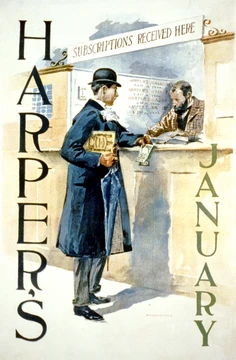
Marie Claire
French monthly women's fashion magazine since 1937.

Francesc Fort · CC BY-SA 4.0
Marie Claire is a monthly women's fashion magazine that has been published in France since 1937. Founded by Jean Prouvost and Marcelle Auclair, it targets upper-income, educated women aged 25 to 49. The magazine has expanded into numerous international editions and sister publications covering topics such as children's fashion, DIY, food, interior design, runway collections, and wellness.
- founded
- 1937
- founders
- Jean Prouvost and Marcelle Auclair
- field
- Women's fashion magazine
- nationality
- French
- known_for
- Monthly publication with 32 international editions and a focus on upper-income,
Verified Timeline
Lore & Background
Marie Claire was founded in France in 1937 by Jean Prouvost and Marcelle Auclair. In 1976, Prouvost retired and his daughter Évelyne took over the magazine, adding L'Oréal Group to the company. The brand owner, Groupe Marie Claire, also owned La Revue du vin de France after acquiring it in 2004. In 2018, Lagardère sold its 42% stake in Groupe Marie Claire back to the Prouvost family.
Reader's Guide
Marie Claire's significance lies in its long-standing presence as a monthly women's fashion magazine in France since 1937, targeting a specific demographic of upper-income, educated women. Its legacy includes the establishment of 32 editions worldwide, with some editions ceasing publication over time. The magazine has faced controversies, such as a 2010 blog post by writer Maura Kelly that drew widespread criticism for comments about obesity, leading to a public apology and response from the editor in chief. The U.S. edition, launched in 1994 by Hearst Corporation, underwent changes in ownership and print frequency, including a reduction to seven issues in 2020 and a shift to digital issues. The UK edition transitioned to digital-only in 2019 due to declining print sales. Marie Claire's international reach and adaptation to digital media underscore its ongoing relevance in fashion publishing.
Did You Know?
- Marie Claire's first issue appeared in 1937, founded by Jean Prouvost and Marcelle Auclair.
- The magazine has 32 editions worldwide, including Croatia and Vietnam which debuted in 2025.
- In 2018, Lagardère sold its 42% stake in Groupe Marie Claire back to the Prouvost family.
- The U.S. edition launched in 1994 by the Hearst Corporation was acquired by Future US in May 2021.
- In October 2010, blogger Maura Kelly's post 'Should Fatties Get A Room?' drew thousands of comments and coverage from CBS, The Today Show, Forbes, The Atlantic, and The Wall Street Journal.
Founding & Editorial Identity
Marie Claire was established in France in 1937, the brainchild of Jean Prouvost (1885–1978) and Marcelle Auclair (1899–1983). From its very first issue, the magazine carved out a distinct niche: a monthly fashion publication aimed squarely at upper-income, educated women between the ages of 25 and 49. The brand name is stylized in all lowercase, and its French pronunciation is [maʁi klɛːʁ]. Over the decades, the core title expanded into a broader family of sister publications covering children's fashion, do-it-yourself projects, food, interior design, runway collections, and wellness. In 1976, Prouvost stepped back from the helm, and his daughter Évelyne assumed leadership of the magazine. Under her stewardship, the company brought the L'Oréal Group into its corporate structure, signaling a shift toward larger commercial partnerships while preserving the title's French editorial identity. The magazine has maintained its twelve-times-per-year cadence throughout its history, anchoring each month from January through December.
Global Reach & Regional Editions
What began as a single French monthly has grown into a truly international brand, with 32 active editions spanning five continents. The earliest foreign ventures appeared in the early 1980s—Japan launched its edition in 1982, followed by Spain and Italy in 1987, Turkey and the United Kingdom in 1988, and the Netherlands in 1990. The 1990s saw a wave of new markets including Brazil, Australia, South Korea, Taiwan, and the United States. More recent additions include Croatia and Vietnam, both debuting in 2025, as well as Nigeria and Serbia in 2023. The brand has also adapted to regional markets, with editions for Saudi Arabia, the UAE, Jordan, and Lebanon under the Arabia banner since 2012, and a Lower Gulf edition from 2013. Not every venture has endured: titles in Chile, Estonia, Hong Kong, India, Indonesia, Malaysia, the Philippines, Poland, Portugal, Romania, Singapore, Syria, South Africa, Thailand, and Venezuela have all ceased publication at various points, reflecting the shifting economics of the global magazine landscape.
Corporate Ownership & Business Evolution
The business structure behind Marie Claire has seen significant evolution over the decades. The parent entity, Groupe Marie Claire, diversified its portfolio by acquiring La Revue du vin de France, a wine publication, in 2004. In 2018, a notable ownership shift occurred when Lagardère divested its 42 percent stake in Groupe Marie Claire, returning it to the Prouvost family and reinforcing the brand's French familial roots. The American edition, launched in 1994 by the Hearst Corporation out of New York City, operated under a separate corporate umbrella. Hearst maintained branch offices in France and Italy, where it also published Marie Claire Italia, alongside numerous U.S. locations spanning Detroit, the West Coast, New England, the Midwest, the Southwest, and the Southeast. In May 2021, Future US acquired the American title from Hearst, marking another chapter in the magazine's corporate journey. Meanwhile, the U.S. edition's editorial leadership cycled through several figures, including Joanna Coles, Anne Fulenwider (2012–2020), Aya Kanai (briefly in 2020), and Sally Holmes, who took over in September 2020.
Cultural Moments & Controversies
Marie Claire's U.S. edition has been at the center of several high-profile cultural moments. In October 2010, blogger Maura Kelly published a piece on the magazine's website titled "Should Fatties Get A Room?" in which she expressed strong negative views about the portrayal of overweight characters on television, particularly the sitcom Mike and Molly. The post generated enormous reader backlash, with thousands of comments flooding the site and major outlets including CBS, The Today Show, Forbes, The Atlantic, and The Wall Street Journal covering the controversy. Kelly subsequently posted a follow-up expressing regret and attributing her remarks to her own history with anorexia. Editor-in-chief Joanna Coles defended Kelly as a "very provocative blogger" with personal body-image struggles. The original posts were later removed from Kelly's archive. On a more positive note, Anne Fulenwider launched Power Trip in 2016, an annual 36-hour invite-only networking conference for accomplished women across industries. During the pandemic, Hearst reduced print frequency from eleven to seven issues and debuted a digital edition featuring Janet Mock on the cover.
Gallery

Frequently Asked Questions
Who is Marie Claire?
Marie Claire is a French women's fashion magazine that has been in monthly publication since 1937. It was created by Jean Prouvost and Marcelle Auclair and is aimed at educated, upper-income women between the ages of 25 and 49.
What is Marie Claire's role in the magazine world?
It functions as a monthly style and lifestyle publication with a strong emphasis on fashion, culture, and wellness for its target readership. The brand has also spawned numerous sister titles covering children's fashion, DIY projects, food, interior design, and runway collections.
How does Marie Claire's story end?
Marie Claire has no ending, as it has been continuously published since its 1937 debut and remains an active monthly title today. Its ongoing legacy is reflected in the 32 international editions it now maintains around the world.
Why is Marie Claire important to the fashion publishing landscape?
As one of the longest-running women's fashion magazines in France, it helped establish the model of a dedicated monthly publication for upper-income, educated readers. Its expansion into dozens of international editions and a broad family of sister publications cemented its influence across the global magazine industry.
Who are Marie Claire's creators?
The magazine was founded in 1937 by Jean Prouvost and Marcelle Auclair. Together they established the French publication that would grow into a major international fashion brand with a wide range of companion titles.
More in Magazines 1-19
Spotted an error? Know more?
This is a living reference — every entry is fact-audited, and reader corrections feed straight into our audit queue. Suggest an edit · See this site's audit record