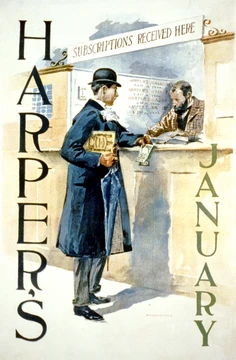
Consumer Reports
Nonprofit organization for independent product testing and consumer advocacy.

Consumer Reports, Inc. · CC BY-SA 4.0
Consumer Reports, legally known as Consumer Reports, Inc. and formerly Consumers Union of United States, Inc., is an American 501(c)(3) nonprofit, nonpartisan organization dedicated to independent product testing and rating, investigative journalism, consumer-oriented research, public education, and consumer advocacy. Founded in February 1936, the organization has more than five million members and publishes content through both its website and a magazine, also called Consumer Reports. These are subscription-based and provide reviews, ratings, recommendations, and advice across a wide range of products and services. The organization has also been included in other digital platforms. Consumer Reports has a policy of independence, purchasing products anonymously at retail locations, and refusing traditional advertising. Throughout its history, the organization has influenced consumer protection legislation and contributed to product recalls and redesigns. In 2025, Phil Radford became the organization’s president and chief executive officer (CEO).
- president_and_CEO_as_of_2025
- Phil Radford
Verified Timeline
Lore & Background
Consumer Reports was founded in February 1936 by former employees of Consumers' Research, who teamed up with journalists, engineers, academics, and scientists after a labor dispute. The predecessor organization, Consumers' Research, had been founded in 1927 by F.J. Schlink following the success of the book *Your Money's Worth*, co-authored with Stuart Chase. When Consumers' Research moved to New York City in 1933 and employees unionized citing unfair pay, Schlink fired the strikers, leading to the creation of Consumers Union. The new group differentiated itself by establishing a community amongst readers, uniting with women's clubs and citizen groups to create a progressive message. By 1940, Consumers Union had surpassed Consumers' Research in subscribers, accumulating a readership of 71,000. Over 250 current employees are represented by The Consumer Reports Guild, which has been represented by the NewsGuild of New York since 1951.
Reader's Guide
Consumer Reports has played a significant role in consumer protection and product safety since its founding. During World War II, it urged supporters to consume less and criticized businesses that wasted paper on advertising. In the 1950s, the organization conducted reviews of seat belts in cars and reported on the dangers of cigarettes; the Surgeon General’s 1964 smoking report cited Consumer Reports research. In 2000, after years of tests showing that many SUVs were prone to rollovers during sharp turns, Consumer Reports testified before Congress, leading to a rollover test becoming part of the National Highway Traffic Safety Administration’s assessment of new cars. In 2017, Consumer Reports led a consortium that established a Digital Standard benchmark by which digital products could be measured. The organization has also been involved in data privacy advocacy, including supporting stronger laws after the Cambridge-Analytica scandal and crafting a proposed State Data Privacy Act with EPIC. Its advocates helped pass New York's first right-to-repair law, opposed the Sprint-T-Mobile merger, backed net neutrality protections, and pushed the FCC to impose phone-unlocking conditions after T-Mobile proposed acquiring Mint Mobile. Consumer Reports also raised concerns about AI-powered voice cloning and called on the FTC to expand enforcement, winning an Anthem award for its investigation. The organization’s archive, spanning more than eight decades, was acquired by Duke University in 2019 and 2020 for the John W. Hartman Center for Sales, Advertising & Marketing History.
Did You Know?
- Consumer Reports was founded in February 1936 by former employees of Consumers' Research after founder F.J. Schlink fired striking workers who had unionized over unfair pay.
- By 1940, Consumers Union had surpassed Consumers' Research in subscribers, reaching a readership of 71,000.
- The House Un-American Activities Committee placed Consumers Union on a list of 'subversive' organizations because of its ties with labor leaders and its refusal to use advertising.
- The Surgeon General’s 1964 smoking report cited Consumer Reports research on the dangers of cigarettes.
- In 2019 and 2020, Duke University acquired the Consumer Reports archive, spanning more than eight decades, for the John W. Hartman Center for Sales, Advertising & Marketing History.
From a Fired Workforce to a National Institution
The story of Consumer Reports begins not with the organization itself, but with a 1927 bestseller. F.J. Schlink and Stuart Chase published *Your Money's Worth*, a book that saw massive readership due to the consumer movement. Schlink followed up by founding Consumers' Research in 1927, which published the *Consumers' Research Bulletin* (earlier called the *Consumer Club Commodity List*). By 1933, the subscriber base had grown past 42,000, and operations relocated to New York City. Tensions erupted when employees organized a union over what they considered unfair wages; Schlink responded by firing the striking workers. Those displaced employees joined forces with journalists, engineers, academics, and scientists to establish Consumers Union in February 1936. The new group differentiated itself by cultivating a sense of community among readers, partnering with women's clubs and citizen groups to spread a progressive consumer message. By 1940, its readership of 71,000 had overtaken Schlink's original enterprise. The labor legacy endures: over 250 current employees are represented by The Consumer Reports Guild, with union representation through the NewsGuild of New York dating to 1951.
The Ad-Free Engine: Independence as Business Model
Consumer Reports operates as a 501(c)(3) nonprofit with a nonpartisan mission, and its structural choices are as distinctive as its content. The organization maintains a strict policy of independence: it buys every product it reviews anonymously at retail stores, and it categorically refuses traditional advertising. All revenue flows from subscriptions—more than five million members pay for access to the magazine and the website, where reviews, ratings, recommendations, and practical advice span a vast array of products and services. The brand has also extended to other digital platforms. This ad-free, subscription-funded model means no corporate sponsor can influence a verdict. In 2025, Phil Radford assumed the roles of president and chief executive officer. The very refusal to accept advertising later became a flashpoint in political battles, with the House Un-American Activities Committee characterizing it as a plot against free enterprise, yet it remains the structural guarantee that a negative review can be published without fear of losing a revenue stream.
From Seat Belts to AI: A Century of Advocacy
Few organizations have shaped consumer protection law as persistently as Consumer Reports. In the 1950s, its testing of automotive seat belts demonstrated their critical safety value, and its research on cigarette dangers was cited in the landmark 1964 Surgeon General's report. In 2000, after years of rollover tests revealed that many SUVs were dangerously prone to tipping during sharp turns, the organization testified before Congress. A mandatory rollover test subsequently became part of the National Highway Traffic Safety Administration's new-vehicle assessment. In 2017, Consumer Reports led a consortium that established a Digital Standard benchmark for evaluating digital products. More recently, its advocates helped pass New York's first right-to-repair law, opposed the Sprint-T-Mobile merger on competition grounds, backed net neutrality protections, and pushed the FCC to impose phone-unlocking conditions after T-Mobile proposed acquiring Mint Mobile. It also championed stronger privacy legislation following the Cambridge-Analytica scandal and co-drafted a proposed State Data Privacy Act with EPIC. Consumer Reports raised concerns about AI-powered voice cloning, calling on the FTC to expand enforcement, and won an Anthem award for its investigation showing the tools can be misused by scammers for identity theft and fraud. The organization also reported with ProPublica on racial disparities in car insurance premiums and helped pass a law requiring manufacturers to test baby food for heavy metals.
Subversive by Design: Resistance and Political Persecution
Consumer Reports' commitment to independence provoked some of the most aggressive opposition in American media history. The *New York Herald Tribune* launched a dedicated institute with the explicit aim of proving that consumer groups were unnecessary, arguing that businesses already performed thorough product testing. The political persecution escalated when the House Un-American Activities Committee, established in 1938, placed Consumers Union on its roster of 'subversive' organizations. The committee pointed to the group's ties with labor leaders and its refusal to carry advertising, which it characterized as a conspiracy against free enterprise. The organization was eventually removed from the list, but the smear campaign backfired, strengthening public sympathy. During World War II, the organization aligned with the war effort, urging members to reduce personal consumption and criticizing companies that exploited the wartime period for advertising and wasted paper. These episodes reveal how radical the concept of an independent, ad-free consumer watchdog appeared to mid-twentieth-century institutions.
Gallery

Frequently Asked Questions
Who is Consumer Reports?
Consumer Reports is an American 501(c)(3) nonprofit that has been testing products and publishing consumer-focused journalism since 1936. It serves more than five million members through both a print magazine and a website, operating as a nonpartisan advocacy and research organization.
What makes Consumer Reports different from other magazines?
The organization buys every product it reviews anonymously at retail stores and refuses all traditional advertising, so its ratings are not influenced by sponsors. Its funding comes entirely from member subscriptions rather than corporate ad revenue, which keeps its editorial work independent.
How did Consumer Reports get its start?
It was founded in February 1936 under the name Consumers Union of United States, Inc., with the goal of giving everyday shoppers unbiased information about the goods they purchase. The group later rebranded to its current legal identity, Consumer Reports, Inc.
Why does Consumer Reports matter to regular readers?
It delivers independent product ratings, investigative journalism, and consumer advocacy free from partisan or commercial pressure, making it a trusted resource for purchase decisions. Its anonymous-purchasing and no-ads policies are specifically designed to prevent any single company or political group from swaying its findings.
Who leads Consumer Reports as of 2025?
Marta Tellado currently serves as both president and CEO of the organization. She oversees the nonprofit's ongoing work in product testing, consumer research, and public education.
More in Magazines 1-19
Spotted an error? Know more?
This is a living reference — every entry is fact-audited, and reader corrections feed straight into our audit queue. Suggest an edit · See this site's audit record